Over the last six months I have been very lucky to have had the time to write whenever I want. Part of the time, I was based in that famous Katherine Mansfield city of Menton, on the French Riviera, where the ions in the air I am sure helped me write a substantial chunk of my next book. When I returned home, I had intended to go back to work, but finding a job took longer than expected and it is only now, six months after my last job, I am about to resume the 9 to 5 workday. In the interim, I have finished writing the book and have completed a substantial edit after finding a wonderful editor/adviser in Bronwen Jones (bronwen-jones.com) to provide the independent and wise advice a writer needs at this critical stage in a book's life. I thoroughly recommend her services.
The new novel is tentatively titled "Aftershock: a story of new beginnings". I'm not sure I'll stick with the title, but it will do for now. It's about how love endures, how two former lovers learn to trust each other again to find a new beginning and it's set against the backdrop of the Christchurch earthquakes of 2011. Bronwen helped me work through that plotline too!
So I am now at crossroads decision: do I self-publish, like I did with my last novel? Or do I go back to Random House, who published my three earlier novels, (randomhouse.co.nz/authors/felicity-price.aspx) and see if they would like to take it on?
I'm thinking I'll try the traditional publisher first, mainly because it's so much easier to let them do a lot of the work for you. You don't earn so much per book, but you do tend to sell more books.
However, I'm not so naive as to expect Random to do all the work. Times have changed and even traditionally published authors have to go someway towards promoting and finding outlets for their books. My next move, therefore is to update my website and build a database from it. A new learning curve.
If Random turns me down, I've been down the indie
author route three times now (with my last book and two from my back
catalogue) so, with a database and interactive website up and running, it should be a comparative breeze.
Meanwhile, it's off to work we go.
Friday, 10 January 2014

Tuesday, 10 December 2013
Give and Ye Shall Receive
 Joining the New Zealand Romance Writers online community has opened a new window of opportunity for me - there are some wonderfully helpful people there like Shirley Wine, who writes Rural Romances as breathtaking and unique as the land that inspires them. Shirley has been generous with her advice and has hosted my first guest blog on her website-linked blog: http://www.shirleywine.com
I hope one day I can help others in the group as much as Shirley has helped me. I've often been told that being generous with your help to other writers can reap its own rewards later on. If this is the case, Shirley deserves payback big-time.
This is what I wrote on her blog, which can be found at: http://www.shirleywine.com/2013/12/felicity-price-guest-post/:
Why I simply had to
write “In Her Mothers’ Shoes”
Like many Baby Boomers, I was born to an unmarried mother in
the 1950s and adopted at birth. My mother never even got to hold me or say
goodbye. I was simply taken from her while her stitches were being sewn up and
she never saw me again.
My adoptive parents told me from an early age that I’d been
adopted. It never seemed a big deal until I was a teenager, a time when many of
us question our parents and wish we’d been born to someone more glamorous and
lenient! From then on, I keenly wanted to know who my “real” mother was (I
wasn’t so fussed about my birth father) but it wasn’t until the New Zealand
adoption laws changed in 1986-7 that I was able to do anything about it.
I finally got to meet her in the late 1980s but it wasn’t
for another twenty-two years that I met up with my new brothers and sister.
The more people I spoke to about finding me new family, the
more I realised just how common my story is. It seemed almost everyone had a
half brother or sister, or cousin, or some close relative who’d suddenly popped
up out of the blue. It was a story waiting to be told, and for some time I
thought about writing it.
Until then, my books had been a bit like Marian Keyes’ books
– a mix of light-hearted humour with some serious issues, but essentially
entertaining. The title of one of them – “A Sandwich Short of a Picnic” – says
it all.
This new novel (yes, it is fictional, but obviously based on
my story) about finding my birth family, had to be different to allow for the
heart-wrenching time my birth mother had and the heart-warming feeling of
finally meeting someone who looks like you. Not to mention, realising that at
last you can have a sense of belonging, of fitting in.
So I started working part-time and spent a year attending
the “Bill Manhire” Victoria University Creative Writing course. It was the most
wonderful experience. I learned how to stop over-writing, over-explaining, how
to internalise better; I learned so many things that helped me write a better book.
When it was finished, my usual publisher, Random House, told
me it wasn’t commercial enough – which it wasn’t. Especially compared with my
earlier books. So I published it myself – in print and online – and documented
some of the fun and games on my blog. I’m still learning how to do it, how to
sell more books online, and how to write even better next time. Because, of
course, I’m writing another book this year. It’s quite different. Who knows if
it will be commercial?!
Sunday, 1 December 2013
It's been raining men - but where's the benefit?
When everyone raves about ultra-fast fibre broadband, it's a no-brainer to sign up for it right?
Now that we've done so, I'm not so sure.
The fibre cable arrived at our gate, along with all the other gates in our street, about two months ago, followed by a flyer from Snap! Did we want to sign up for some incredibly cheap rate, including landlines, that was significantly less per month than our existing supplier? Of course. So, after decades with Telecom, we switched everything - phones and internet provider - to Snap!
Men came to make diagrams where the cable would go up our long drive. Men came to have another look at where it would go into the house. More men came back a month or so later to burrow up the garden border at the side of the drive, like big hairy rabbits burrowing holes every few meters and magically drilling horizontally in between to stretch the cable. Another bunch of men came to drill through the wall and connect up the phones and the Fritz-box that holds the key to the ultra-fast broadband. But they couldn't find where the copper cable comes in so they couldn't disconnect it. Several phone calls later, another bunch of men came to disconnect it. Meanwhile, my laptop wouldn't get emails and neither would my non-Telecom phone. More phone calls to reconnect. Apparently there was a new code that had to be entered into the laptop and phone, but nobody had bothered to tell us.
It became something of a trial, really, waiting for endless people at call centres to fix each problem and get everything going again. But three weeks later, we're all connected and looking forward to enjoying the benefits of ultra-fast fibre broadband. I say "looking forward" because neither the cable provider nor the ISP has bothered to explain to us what the benefits actually are and how to access them. Such as movies. My laptop, being an older one, doesn't like playing movies unless they're on DVD - which don't need fibre broadband to be delivered to my lap.
Next step: upgrading the laptop software to play movies and finding out what else the fibre wizardry can do.
It would be a pain to think that all those men laboured in vain.
Now that we've done so, I'm not so sure.
The fibre cable arrived at our gate, along with all the other gates in our street, about two months ago, followed by a flyer from Snap! Did we want to sign up for some incredibly cheap rate, including landlines, that was significantly less per month than our existing supplier? Of course. So, after decades with Telecom, we switched everything - phones and internet provider - to Snap!
Men came to make diagrams where the cable would go up our long drive. Men came to have another look at where it would go into the house. More men came back a month or so later to burrow up the garden border at the side of the drive, like big hairy rabbits burrowing holes every few meters and magically drilling horizontally in between to stretch the cable. Another bunch of men came to drill through the wall and connect up the phones and the Fritz-box that holds the key to the ultra-fast broadband. But they couldn't find where the copper cable comes in so they couldn't disconnect it. Several phone calls later, another bunch of men came to disconnect it. Meanwhile, my laptop wouldn't get emails and neither would my non-Telecom phone. More phone calls to reconnect. Apparently there was a new code that had to be entered into the laptop and phone, but nobody had bothered to tell us.
It became something of a trial, really, waiting for endless people at call centres to fix each problem and get everything going again. But three weeks later, we're all connected and looking forward to enjoying the benefits of ultra-fast fibre broadband. I say "looking forward" because neither the cable provider nor the ISP has bothered to explain to us what the benefits actually are and how to access them. Such as movies. My laptop, being an older one, doesn't like playing movies unless they're on DVD - which don't need fibre broadband to be delivered to my lap.
Next step: upgrading the laptop software to play movies and finding out what else the fibre wizardry can do.
It would be a pain to think that all those men laboured in vain.
Tuesday, 26 November 2013
An Indie learns to publish on Kobo and Smashwords
Having made the most of the "Kindle Select" promotional offers with my latest book (In Her Mothers' Shoes) - the ones you can only have if your book is exclusive to Kindle - I decided the time was right to move onto other pastures, hopefully just as green. Kindle was my first learning experience in Indie Publishing, as they call it. I sweated for hours over my keyboard formatting the book for html; I nearly went mad getting the cover the right size; and I almost lost it trying to get the worldwide distribution settings right. But after a while, I got the hang of it so well I published two of my earlier novels on Kindle as well - and each time, it got a little easier.
 You would think, then, that publishing my adoption-triangle novel In Her Mothers' Shoes on Kobo and Smashwords would be a doddle.
Not quite.
While Kindle requires you to save the book as "Web Page, Filtered" (html), Kobo needs it in epub, odt, mobi (whatever that is) and, thankfully, word documents. Smashwords, on the other hand, only takes older word documents but the formatting is much the same.
The only major difference between Kindle and Smashwords is that you can't have your paragraphs indented AND a 12pt (or any-sized) gap after the paragraph. It has to be one or the other. But it was only a moment's work to reformat the whole book without the extra space. How times have changed!There is also a specific requirement for how you word your copyright on Smashwords, which I hadn't struck before (Published by Felicity Price & Associates at Smashwords, © Copyright 2013 Felicity Price).
For Smashwords and Kobo, you need to have a new ISBN Number (which you get when you apply first time round - one for print, one for Kindle and one for epub).
With those four things sorted, I clicked the "Publish" button and my book was up there in the Smashwords and Kobo stores.
Just how this will translate to sales, I have yet to learn. I suspect there is a secret formula somewhere but, unlike Kindle, there doesn't appear to be a special "Select" marketing programme that helps boost your sales up the rankings.
That's my next task. I'll keep you posted!
Sunday, 17 November 2013
Top Ten Tips for Painless Publishing on Kindle
Even the most reluctant technophone can become highly savvy when the motivation is to get your book out there. And by out there, I mean read by people who don't even know you.

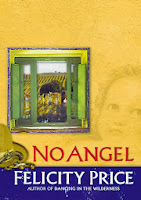 In the last couple of months, I've put two of my earlier novels - No Angel and Call of the Falcon - up on Kindle. They say that the more books you have in your author profile available for purchase, the more you are likely to sell since people who enjoy one book can then go back and buy another. So I've done all the right things like put a request for a review at the end of the book (with an appropriate link) and put a list of my other books for sale at the front (with their own links too). It takes time, of course, but the more you do the easier it becomes. I recall when I put In Her Mothers' Shoes on Kindle last year it took forever to get the formatting right and the cover the right size and the rights all allocated correctly. Now I've done it three times, I'm becoming a bit of an expert. In fact, I even ran a couple of classes on the subject of digital self-publishing for the local branch of the NZ Society for Authors earlier in the year. Who would have thought it?!
So, if you're thinking of doing this yourself sometime, here are my summarised top ten tips for a comparatively painless way of publishing on Kindle:
1. Get your book professionally edited - and that doesn't mean friends and family
2. Get your cover professionally designed by a graphic designer who knows about what works on a book cover
3. Write a promotional "blurb" for your book of up to 300 words that will make its target audience want to buy it (and you do need to work out what sort of people your readers will be). This is a vital sales tool, as are the 8 "key words/phrases" you choose to help your book be found. (Don't use words in the title).
4. Get ISBN numbers from (in New Zealand) www.natlib.govt.nz. You will need one for Kindle, one for e-readers and one for print. They are free.
5. Log onto Kindle Direct Publishing, create a password, click to create a new book.
6. Make formatting your friend. Follow what KDP tells you to do, set fonts (only 3 are available) at 11pt, delete any page numbers, and save the document as HTML (Save as: Type: Web Page Filtered)
7. Upload your book following the prompts. Then follow the instructions to see how it will look on Kindle. If it doesn't look right, fix the errors and upload it again.
8. Upload your cover according to the size limits, and add your "blurb" and your 8 key phrases.
9. Decide on your royalty option, pricing, tick it is not in the public domain (unless it's an old copyright-expired publication), worldwide distribution, Digital Rights Management and available for lending. Royalties (for those of us not US residents) will come in the form of a cheque mailed when the amount due reaches over 100 pounds or 100 US dollars.
10. Click Save and Publish and in a day or two you will see your book, its cover, and its blurb up in the Kindle Store.
Good luck! I'm looking forward to seeing what difference it makes having several books for sale now. I'll keep you posted - along with any further tips for getting sales.

 In the last couple of months, I've put two of my earlier novels - No Angel and Call of the Falcon - up on Kindle. They say that the more books you have in your author profile available for purchase, the more you are likely to sell since people who enjoy one book can then go back and buy another. So I've done all the right things like put a request for a review at the end of the book (with an appropriate link) and put a list of my other books for sale at the front (with their own links too). It takes time, of course, but the more you do the easier it becomes. I recall when I put In Her Mothers' Shoes on Kindle last year it took forever to get the formatting right and the cover the right size and the rights all allocated correctly. Now I've done it three times, I'm becoming a bit of an expert. In fact, I even ran a couple of classes on the subject of digital self-publishing for the local branch of the NZ Society for Authors earlier in the year. Who would have thought it?!
 So, if you're thinking of doing this yourself sometime, here are my summarised top ten tips for a comparatively painless way of publishing on Kindle:
1. Get your book professionally edited - and that doesn't mean friends and family
2. Get your cover professionally designed by a graphic designer who knows about what works on a book cover
3. Write a promotional "blurb" for your book of up to 300 words that will make its target audience want to buy it (and you do need to work out what sort of people your readers will be). This is a vital sales tool, as are the 8 "key words/phrases" you choose to help your book be found. (Don't use words in the title).
4. Get ISBN numbers from (in New Zealand) www.natlib.govt.nz. You will need one for Kindle, one for e-readers and one for print. They are free.
5. Log onto Kindle Direct Publishing, create a password, click to create a new book.
6. Make formatting your friend. Follow what KDP tells you to do, set fonts (only 3 are available) at 11pt, delete any page numbers, and save the document as HTML (Save as: Type: Web Page Filtered)
7. Upload your book following the prompts. Then follow the instructions to see how it will look on Kindle. If it doesn't look right, fix the errors and upload it again.
8. Upload your cover according to the size limits, and add your "blurb" and your 8 key phrases.
9. Decide on your royalty option, pricing, tick it is not in the public domain (unless it's an old copyright-expired publication), worldwide distribution, Digital Rights Management and available for lending. Royalties (for those of us not US residents) will come in the form of a cheque mailed when the amount due reaches over 100 pounds or 100 US dollars.
10. Click Save and Publish and in a day or two you will see your book, its cover, and its blurb up in the Kindle Store.
Good luck! I'm looking forward to seeing what difference it makes having several books for sale now. I'll keep you posted - along with any further tips for getting sales.
Saturday, 9 November 2013
Top writers are ignoring top writers' advice
In the last couple of weeks, I've read two of the most highly recommended female writers of our generation - Anne Tyler (Dinner at the Homesick Restaurant) and Rose Tremain (The Swimming Pool Season).
There is no doubt in my mind that they are both exceptional writers;
their prose is inspirational. But taken as a whole, their books -
specifically their characters and their stories - leave me pretty cold.
In neither book was there a single engaging character. In both books, the characters were either brittle and damaged, just plain difficult, or passive pushovers who never learned to stand up for themselves. In both books, there was at least one major character who was a nutjob.
Both books also go into a tremendous amount of extraneous detail, building up as complicated a picture as possible. And the detail often lacks interest. There are a lot of dream sequences (yawn) and several totally irrelevant scenes, with new, unusual characters added, that made me wonder if they came from a writing exercise or short story Tyler decided to throw in for good measure.
Dare I say it, AS Byatt does this too - adds page after page of diversion and detail - sometimes in the extreme.
Yet what about all that advice to writers - by some of the world's top writers - to make sure all your subplots and action contribute in some way to the overriding theme or story? Not to mention the advice about dream sequences - leave them out because they bore the pants off people.
Funnily enough, reviews in the Telegraph and Guardian often point out the extraneous detail and unlikeable characters in these books, but they still rave about how these writers are so good.
I don't get it!
In neither book was there a single engaging character. In both books, the characters were either brittle and damaged, just plain difficult, or passive pushovers who never learned to stand up for themselves. In both books, there was at least one major character who was a nutjob.
Both books also go into a tremendous amount of extraneous detail, building up as complicated a picture as possible. And the detail often lacks interest. There are a lot of dream sequences (yawn) and several totally irrelevant scenes, with new, unusual characters added, that made me wonder if they came from a writing exercise or short story Tyler decided to throw in for good measure.
Dare I say it, AS Byatt does this too - adds page after page of diversion and detail - sometimes in the extreme.
Yet what about all that advice to writers - by some of the world's top writers - to make sure all your subplots and action contribute in some way to the overriding theme or story? Not to mention the advice about dream sequences - leave them out because they bore the pants off people.
Funnily enough, reviews in the Telegraph and Guardian often point out the extraneous detail and unlikeable characters in these books, but they still rave about how these writers are so good.
I don't get it!
Sunday, 3 November 2013
Time to Write
What an unaccustomed luxury to have time to write. My first book, Dancing in the Wilderness, was published in 2001 and I wrote a lot of it after midnight, after the kids were in bed, after the after-hours work was polished off. From then on, writing was secondary to the day job, squeezed in between running a very busy business and looking after two equally busy teenagers. In fact it was the demands of those very teenagers, combined with the growing demands of having elderly, increasingly frail parents, plus the job, the community work and a badly behaved spaniel, that inspired me to write my fourth, fifth and sixth books, including the best-selling Sandwich Short of a Picnic. http://www.amazon.com/dp/B00AM7FHCC
I was a fully fledged member of the Sandwich Generation - sandwiched between elderly parents, teenagers and a career, all making demands on my time and leaving no time for me, let alone for writing.
But as all authors know, you just make the time. You're driven to. There's something about that laptop, those characters, the sudden plot twist that overtook you the last time you typed out a chapter. You just can't keep away.
In July this year, as a long-planned bucket-list move, my husband and I spent three months in Menton, in the south of France, where I had plenty of time to write - as well as eat a lot of cheese, drink a lot of wine and swim in the sea every day. My eighth novel sped onto the page. And now that we're back home and waiting for the right job to come by, there's even more time to write. I can't believe how much fun it is, sitting down at the laptop every day. Now I can be just like Stephen King, who sets himself a 2000 word limit every day. And without another job to go to, it's not that hard to achieve.
Like all good things it can't last forever. Like most writers, I have to have a day job. Besides, how will I get that real-life experience I can write about at some later date?
I was a fully fledged member of the Sandwich Generation - sandwiched between elderly parents, teenagers and a career, all making demands on my time and leaving no time for me, let alone for writing.
But as all authors know, you just make the time. You're driven to. There's something about that laptop, those characters, the sudden plot twist that overtook you the last time you typed out a chapter. You just can't keep away.
In July this year, as a long-planned bucket-list move, my husband and I spent three months in Menton, in the south of France, where I had plenty of time to write - as well as eat a lot of cheese, drink a lot of wine and swim in the sea every day. My eighth novel sped onto the page. And now that we're back home and waiting for the right job to come by, there's even more time to write. I can't believe how much fun it is, sitting down at the laptop every day. Now I can be just like Stephen King, who sets himself a 2000 word limit every day. And without another job to go to, it's not that hard to achieve.
Like all good things it can't last forever. Like most writers, I have to have a day job. Besides, how will I get that real-life experience I can write about at some later date?
Monday, 26 August 2013
From a Distance issues look a lot clearer
http://www.stuff.co.nz/the-press/opinion/perspective/9089709/Performing-arts-precinct-will-suffer
The Town hall debate needs clarity of thinking instead of
the current emotional knee-jerk reaction to supposed voter preferences or
“architectural integrity”. What’s the point of architectural integrity if
people have very little use for the buildings saved?
Save the Town Hall auditorium by all means for its iconic
status, its world-class acoustics, its heritage, its wonderful Rieger organ,
its place in our hearts. But now is the time, after 40 years use has revealed
their inadequacies, to forget about the impractical James Hay Theatre, the
unpopular Boaters Restaurant, and the unnecessary Limes Room and associated
function rooms, which will be replaced in due course by function rooms at the
new Convention Centre and local hotels.
The Council’s proposed vote in favour of keeping the lot
will deprive Christchurch of the Arts Precinct it not only deserves but badly
needs. It was all there in the CERA Blueprint – a new, purpose-built concert
auditorium, a new Court Theatre, a new Music Centre, and a home for the CSO and
for the city’s other resilient arts organisations that have managed to thrive
despite events of the last three years.
How has this come
about?
The Council “consulted” on saving the Town Hall during
consultation on its Annual Plan (LTCCP). The heritage lobby was vocal in saving
the Town Hall in its entirety, without really understanding what they were
demanding, other than preserving an iconic building. The arts community - those
most affected – were not vocal and have not been able to have their say on
using a large chunk of the planned Arts Precinct money to save the James Hay
Theatre, which they rarely, if ever, use. And it’s difficult to dissent anyway
when the Council is one of your funders.
The Council tells us it has looked at all the options and
saving the whole Town Hall complex has been agreed as the best option. But has
it really looked dispassionately at the other options? It seems that the best
option of all – retaining the Town Hall auditorium with an iconic new foyer
designed by original architects Warren and Mahoney (or by Sir Miles Warren if
he would agree to it) – has not been afforded the public discussion it deserves.
This option was considered by councillors late last year and
was recommended by the staff, but later in the committee meeting an impassioned
plea by Sir Miles Warren to save the whole thing to preserve its architectural
integrity won over the councillors’ hearts. I’m not sure if the auditorium and
grand foyer option was ever considered by the full council.
It’s hard to know why the council is so in thrall to Sir
Miles Warren’s pleas. His iron will is going to leave the city’s arts community
with half the precinct they need. The full council has the opportunity this
week to decide if they’re giving the arts a fair go.
They’ve only got this one chance to get it right and, even
though many of them won’t be councillors next year to see their legacy fulfilled,
such a significant decision should not be rushed through without due
consideration of all the alternatives – especially alternatives that would
provide significantly more benefit to the arts.
The $80 million
win-win option
Often when there’s a major conflict within an organisation
or a community over an issue, the most sensible solution is to look for a
compromise, preferably one where everybody wins to some extent.
Last year, council staff proposed such a solution – an
overwhelmingly sensible proposal that, for a preliminary estimate of $70 to $80
million, would save and fully restore the Town Hall auditorium, provide it with
a fitting foyer, and thereby allocate the remaining $80 million (out of a total
budgeted now for the Arts Precinct of $158 million) for music and theatre
venues for the city’s major arts organisations.
The Council commissioned Warren and Mahoney to design and
report on the aesthetics and practicalities of retaining the auditorium only,
with a new entrance and gathering space that would have sufficient grandeur and
design impact to provide “a sense of place”. Included in the proposal was
advice from structural and acoustic engineers. The design, published in a
committee report on the council’s website, kept part of the foyer in its
existing location and created a new entrance to the east (Colombo Street) that
gave it, according to the report by Warren and Mahoney managing director, Peter
Marshall, “a sense of arrival in conjunction with existing” [structures].
“We
are also of the opinion that the Auditorium could function alone, with modifications
that we have suggested previously, and still have a strong architectural and
urban presence,” Peter Marshall wrote. “This opinion is shared by Sir Miles
Warren.”
Sir Miles obviously changed his mind because he turned up at
the meeting and pleaded with councillors to retain the whole complex.
What is wrong with
the James Hay Theatre?
With 1006 seats, the James Hay is similar in size to the 1250-seat
Isaac Theatre Royal, which is currently being restored. However it has none of
the grandeur, it has a number of flaws (such as acoustics, raking of the seats,
backstage layout, fly-towers, staging) and is generally disliked by theatre and
music companies. The Royal New Zealand Ballet, the opera and Showbiz have all
rejected it in favour or the Isaac Theatre Royal.
A city this size does not need two auditoriums of almost the
same capacity. Keeping it means that the sort of music and drama venue we do
need (around 500 to 600 seats) is unlikely to be built.
What will the Arts
Precinct look like?
So far, as far as I’m aware, the only agreement on tenants
of the new Arts Precinct (possibly because it’s so restricted by the small $32.5
million budget) is that it will include a new Court Theatre and a Music Centre.
Proposals for it to be the home of the CSO and other arts organisations have
yet to come to fruition.
The Arts Precinct is supposed to extend, under the council’s
plan, from the Town Hall to the Isaac Theatre Royal and suggestions are that
the buildings will be located close to each other, on or near Armagh Street, at
the rear of the Isaac Theatre Royal building.
The Court Theatre building will be used – like the current
one – almost every day of the year. It has been estimated to cost around $32
million, plus the cost of the land. This, like all proposed projects and costs
in the precinct, is by no means definite but it is indicative of the size of a
complex The Court currently has and will need in future: a 400-seat theatre
plus a smaller studio theatre, a joint foyer and booking office, at least one
rehearsal room, as well as the other theatre essentials like space for set
design, wardrobe and offices.
The Music Centre building is proposed to include studios,
music rooms and storage, and a 350-seat concert chamber.
There has also been talk of an outdoor performance space in
the Arts Precinct.
The city’s music, theatre and other performance people have
often said that there is a desperate need for a smaller music/drama/dance
venue. About half the size of the Isaac Theatre Royal and James Hay Theatre,
the theatre would be a purpose-built, 500 to 600-seat auditorium suitable for
both “plug-and-play” bands and amateur theatre groups in search of a venue - rock
bands to Repertory.
The Arts Precinct is also supposed to house facilities for
the CSO that could include offices and storage, but probably not a rehearsal
room because of the very large size requirements. Before the earthquakes, the
CSO had acquired a rehearsal room and office space in the Salvation Army
Citadel near the Town Hall, but this is no more.
It is also hoped by some that the Arts Precinct will become
a hub for the city’s thriving arts, such as Showbiz, local ballet, The Body
Festival, the International Buskers Festival, The Press Christchurch Writers
Festival, the Arts Festival and SCAPE. Galleries and fine arts could stretch
around the corner as far as Christchurch Art Gallery.
Arts organisations are always short of money, so the sort of
subsidised rent that a council-owned Arts Precinct hub could provide for them
should help drive the sort of creative ambience that would thrive with activity
and ideas.
And where the arts go, cafés, bars and restaurants follow.
Monday, 8 July 2013
From a Distance
Two weeks and twelve thousand miles away from home and what
was so important before is much less important now. No more scraping frost off
the car, no more traffic queues to work in the morning, no more work!
But some things do not fade away with distance. Such as the
ongoing media nastiness about Bob Parker’s situation. Intense pressure these
past few days and weeks (maybe even years!) has got too much for him and he’s
exhausted. Who can blame him, new revelations every day about some fresh
communication breakdown inside the council? Combined with continued media
attacks, relentless, enough to wear anyone down. He’s borne it all with the
sort of statesmanlike leadership we saw after the earthquakes – calm authority,
telling us what he has been told is the truth. From what I’ve seen of Bob, he’s
straight up. He wouldn’t lie.
But The Press continues to be unrelenting. The day after his
announcement not to stand for election, there were two pages of “Mainlander” criticism
of Bob and the council they chose not to pull. And now, whenever they refer to
his decision, they imply he stood down because early indications The Press poll
results showed his popularity had declined. And there’s a whole lot more
nastiness that doesn’t bear repeating.
A lot of people asked me ‘Why don’t you stand for the
council? We need people like you.’
You’ve got to be kidding. Who would want to be a councillor –
let alone a mayor – when everybody, from the local rag to the local whingers,
see you as fair game for snide remarks and downright slander. I’ve always stuck
up for The Press, it was my training ground after all, but it seems to have
become a source of major negativity in our town. How long before the honeymoon’s
over and Lianne gets the same treatment? Six months? Less?
I had a very small experience of this negativity when I
carried out the council audit. I was fair game for the naysayers, The Press and
its many columnists included. But what I went through then was nothing compared
to what the Mayor has had to put up with lately.
True, he’s not perfect. True, his decision to trust his
management team may have come back to bite him. But for heaven’s sake, let the
whingeing stop!
There is a small glimmer of hope: you kick a man when he’s
down and people go to his rescue, stand up for him even. And the online
nastiness eventually self corrects. I hope that’s soon.
Saturday, 17 November 2012
Overcoming the rejection spiral
No sooner had I received a nice little cheque from Amazon for sales of "In Her Mothers' Shoes" and was thinking all was well with my writing world, along comes a double whammy: not one but two rejections in just over a week. Applications for two mid-career writers' awards had both come to naught. Of minor consolation was that I had been short-listed along with some very illustrious writers for one of the awards - so illustrious in fact that I knew I was unlikely to win. But just the same, rejection, when it comes, hits you hard.
But then, with timing that looks almost like karma, I came across a link to a restorative piece by Rose Tremain about how over the years she had plenty of time to perfect the art of not winning a prize. Written a couple of weeks ago when she didn't win a prize for her novel about Merivel, the piece described how she has learned to frame her smile at awards ceremonies for the moment she learned someone else had won, and how she tried to console herself that the book itself should be all the solace she needs: "It's still there, after all. It hasn't even suffered the wounding that can sometimes be inflicted by critics. It has just "not won". It has almost won, but not quite. It is evidently vain to see this as a catastrophe.Some measure of depression, however, almost always creeps in. A "non-win" is of course a loss."
You can find it at http://www.guardian.co.uk/books/2012/nov/08/art-of-not-winning-literary-prizes
About the same time, I came across a passage in a book of Kate Granville's which was equally timely and made me, for the time being, abandon thoughts of giving up writing forever and bring the persistence to bear that I am so well known for: I never give up.
Like Kate Granville, who was amazingly persistent, it's going to mean a lot of rewriting. Hopefully also like Kate Granville, it will result in a much better next novel.
But then, with timing that looks almost like karma, I came across a link to a restorative piece by Rose Tremain about how over the years she had plenty of time to perfect the art of not winning a prize. Written a couple of weeks ago when she didn't win a prize for her novel about Merivel, the piece described how she has learned to frame her smile at awards ceremonies for the moment she learned someone else had won, and how she tried to console herself that the book itself should be all the solace she needs: "It's still there, after all. It hasn't even suffered the wounding that can sometimes be inflicted by critics. It has just "not won". It has almost won, but not quite. It is evidently vain to see this as a catastrophe.Some measure of depression, however, almost always creeps in. A "non-win" is of course a loss."
You can find it at http://www.guardian.co.uk/books/2012/nov/08/art-of-not-winning-literary-prizes
About the same time, I came across a passage in a book of Kate Granville's which was equally timely and made me, for the time being, abandon thoughts of giving up writing forever and bring the persistence to bear that I am so well known for: I never give up.
Like Kate Granville, who was amazingly persistent, it's going to mean a lot of rewriting. Hopefully also like Kate Granville, it will result in a much better next novel.
Friday, 26 October 2012
Publicising your book - how far do you go?
The lengths an author will go to to have the front cover of her book published in one of the country's top magazines... This is from the current issue of NZ Listener magazine:
COVER STORY
Felicity Price and Rebecca Macfie report on e-books and how they are
revolutionising the literary world, with advantages for both readers and
writers. Also in this issue, Carroll du Chateau reports on New
Zealand’s first Social Entrepreneurs School and how it is helping
grass-roots people build businesses out of their ideas and passion; and
Diana Wichtel talks with Downton Abbey’s Hugh Bonneville who says he hasn’t let period-drama fame go to his head.
Last month I wrote a story about e-books and self-publishing - surprise! - and it was published in the NZ Listener for this week's edition. It included this piece on self publishing:

October 27-November 2 Issue 3781
COVER STORY
The Secrets of e-Book Success
Felicity Price and Rebecca Macfie report on e-books and how they are
revolutionising the literary world, with advantages for both readers and
writers. Also in this issue, Carroll du Chateau reports on New
Zealand’s first Social Entrepreneurs School and how it is helping
grass-roots people build businesses out of their ideas and passion; and
Diana Wichtel talks with Downton Abbey’s Hugh Bonneville who says he hasn’t let period-drama fame go to his head. Last month I wrote a story about e-books and self-publishing - surprise! - and it was published in the NZ Listener for this week's edition. It included this piece on self publishing:
Print
is still prized above digital
Despite the rapid rise
in e-book popularity and the rush to self-publish online, every author I’ve
come across still prefers to see their book in printed form, to have and to
hold, to bury their nose inside the fold and inhale that wonderful combination
of new paper and printer’s ink.
In July, I published “In
Her Mothers’ Shoes” – a novel about the adoption triangle and mother-daughter
relationships – up on Amazon Kindle as an e-book. But I couldn’t quite come to
terms with not having a real book. When a growing number of people said they
couldn’t access it because they didn’t have an e-reader, in August I had it
printed as well.
As an e-book, it joins
the one million others apparently published for the first time in the last year
alone, along with the 20 million e-books available online worldwide, many of
them classics scanned and available free, many more on sale for under $5.
That’s the expectation
we have of the internet – most stuff is free or extremely cheap. Which begs the
question: how can readers expect to receive a quality product when it’s written
by amateurs with little or no editing and none of the quality control a
professional publishing house would impose?
The answer is simple:
the market decides. Currently, the market is deciding it wants paranormal and
erotic fiction and it doesn’t care if it’s not terribly well written. And the
market is coming full circle. Authors of this hugely popular stuff, who
couldn’t get their books published a few years ago and self-published online
instead, are now being offered eye-wateringly lucrative publishing contracts by
traditional publishers so they can sell the printed version in the high street
bookstores.
Increasingly, established
authors like me are learning not only how to get your creative masterpiece into
a professional-looking e-readable book form with an attractive cover, but how
to price it and then promote it, so it sells more than the usual 100.
Self-publishing has
become a huge industry, with hundreds of companies offering services to design
and publish your book. My initial foray has so far been limited to Amazon
Kindle – it offers special deals for short-term exclusivity, it covers the
majority of the e-book market, it already has my last three books listed, and
Amazon makes the experience (which is full of pitfalls and complexities)
comparatively easy.
Amazon also offers a
service called CreateSpace that allows you to self-publish your book in printed
form and buy as many copies as you want, complete with barcode and glossy
colour cover.
Photo Caption: Rejected by my publisher, “In Her Mothers’
Shoes” is now on Amazon and in bookshops. It tells the fictional story of two
mothers – my teenage birth mother who never even got to see me let alone hold
me before I was taken away for adoption, and my adoptive mother who had waited
for a baby to call her own for over ten years of marriage. And it traces the
adoptive child’s constant need to fit in, to find a sense of belonging.
Subscribe to:
Posts (Atom)